Style and sourcing
Minimalist interior design
Minimalist interior design is the second largest body of work in this studio. Ten of the published schemes are minimalist, and almost all of them are warm. That combination has a name, warm minimalism, and it describes this practice better than any other term.
On this page
Minimalism has a reputation for being cold, expensive and hard to live in. Two of those are avoidable. This page explains which, and shows the projects.
Minimalism is a discipline, not an aesthetic
The common misreading is that minimalism means white walls and no possessions. What it means is that nothing is present without a reason.
That is a harder brief than a decorated interior. In a layered room a weak decision hides behind three other things. In a minimalist room there is nothing to hide behind, so every proportion, junction and shadow line is on display. This is why minimalist interiors cost more per square metre to document than they look like they should.
It is also why minimalism punishes poor planning. If the storage is not resolved, the room fills up, and a minimalist room with clutter in it is just an empty room with clutter in it.
Warm minimalism, which is what most people actually want
Ask for minimalism and you usually get the Instagram version: white, grey, hard, unlivable. Warm minimalism keeps the discipline and changes the palette.
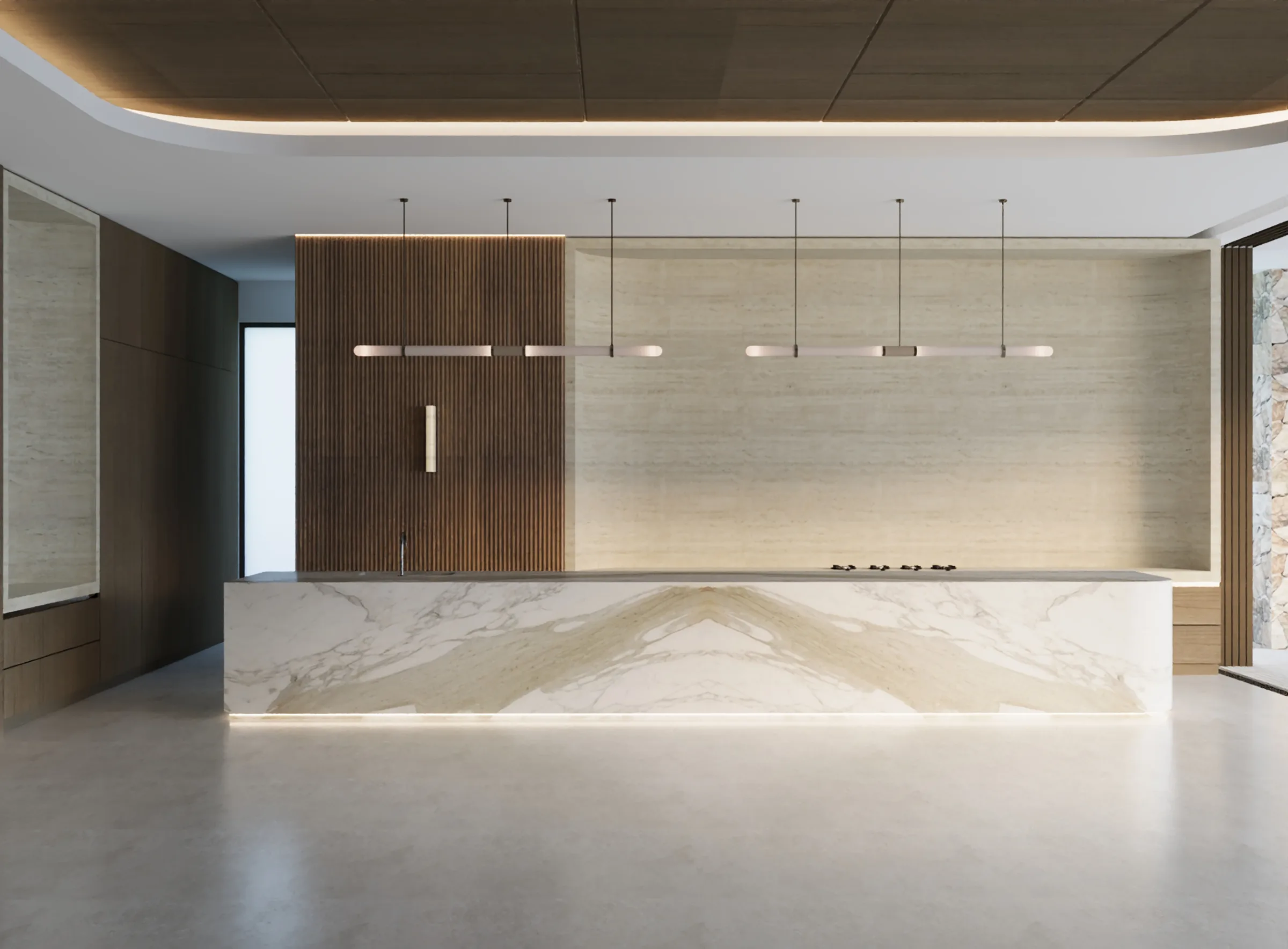
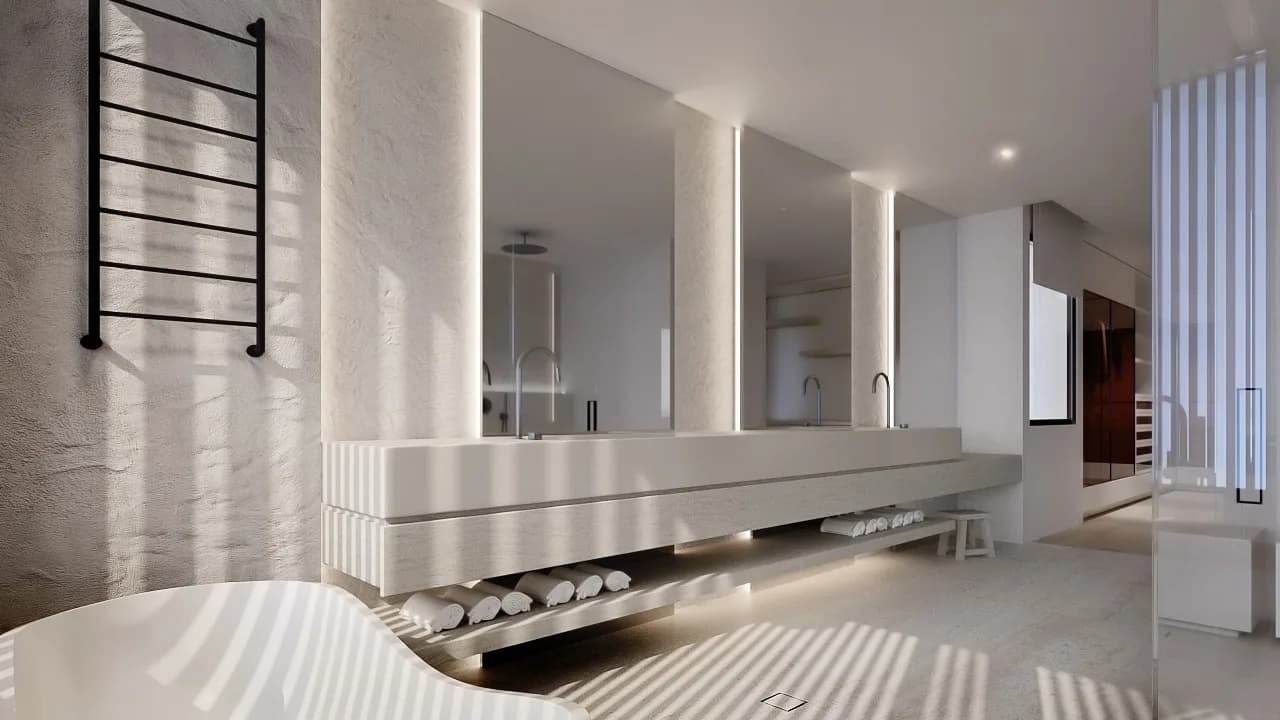
In practice that means natural materials doing the work that colour and pattern would otherwise do. Timber with visible grain, stone with movement in it, linen and wool instead of flat synthetics, and light layered at several heights. The restraint is the same. The room is somewhere you would want to sit.
Seven of the nine minimalist schemes here are explicitly warm, which is not a coincidence. Almost nobody briefs for cold.
The projects
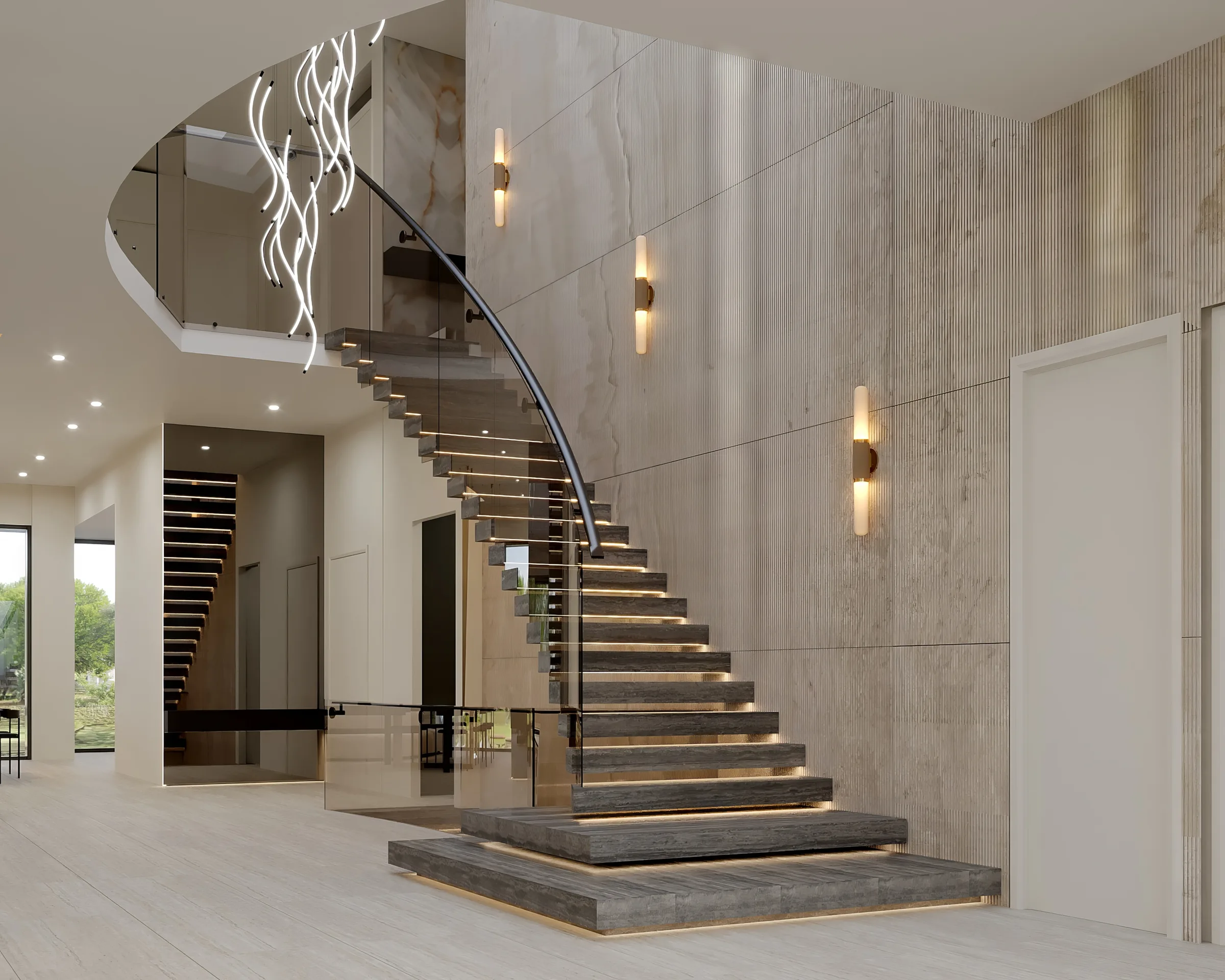
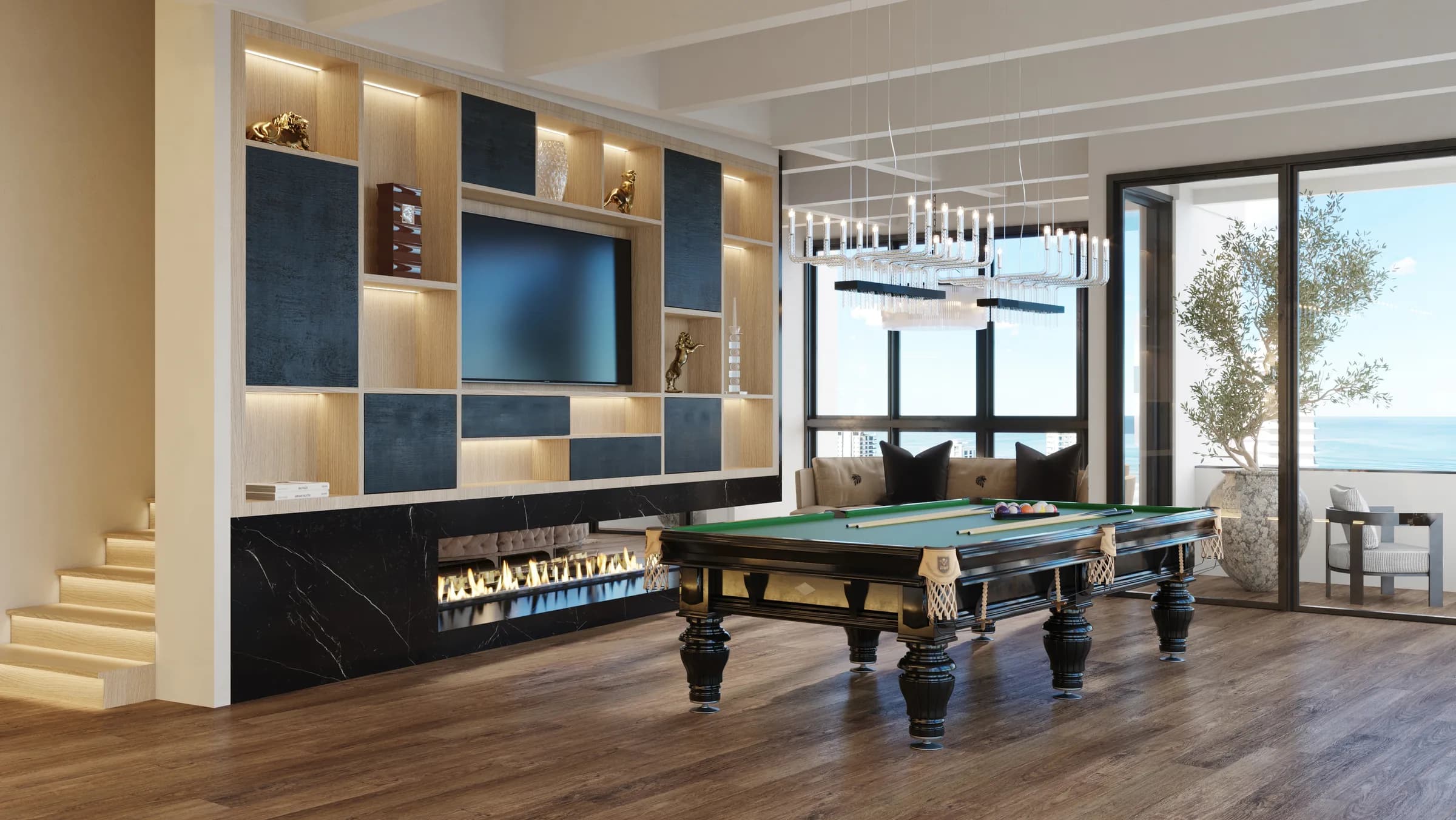
Warm minimalism. Helensvale is refined warm minimalism. The Ashbourne House at Carrara is warm and sculptural. Rosebrook in New South Wales is warm contemporary minimalism. Shoal Point III in Queensland is warm coastal minimalism.
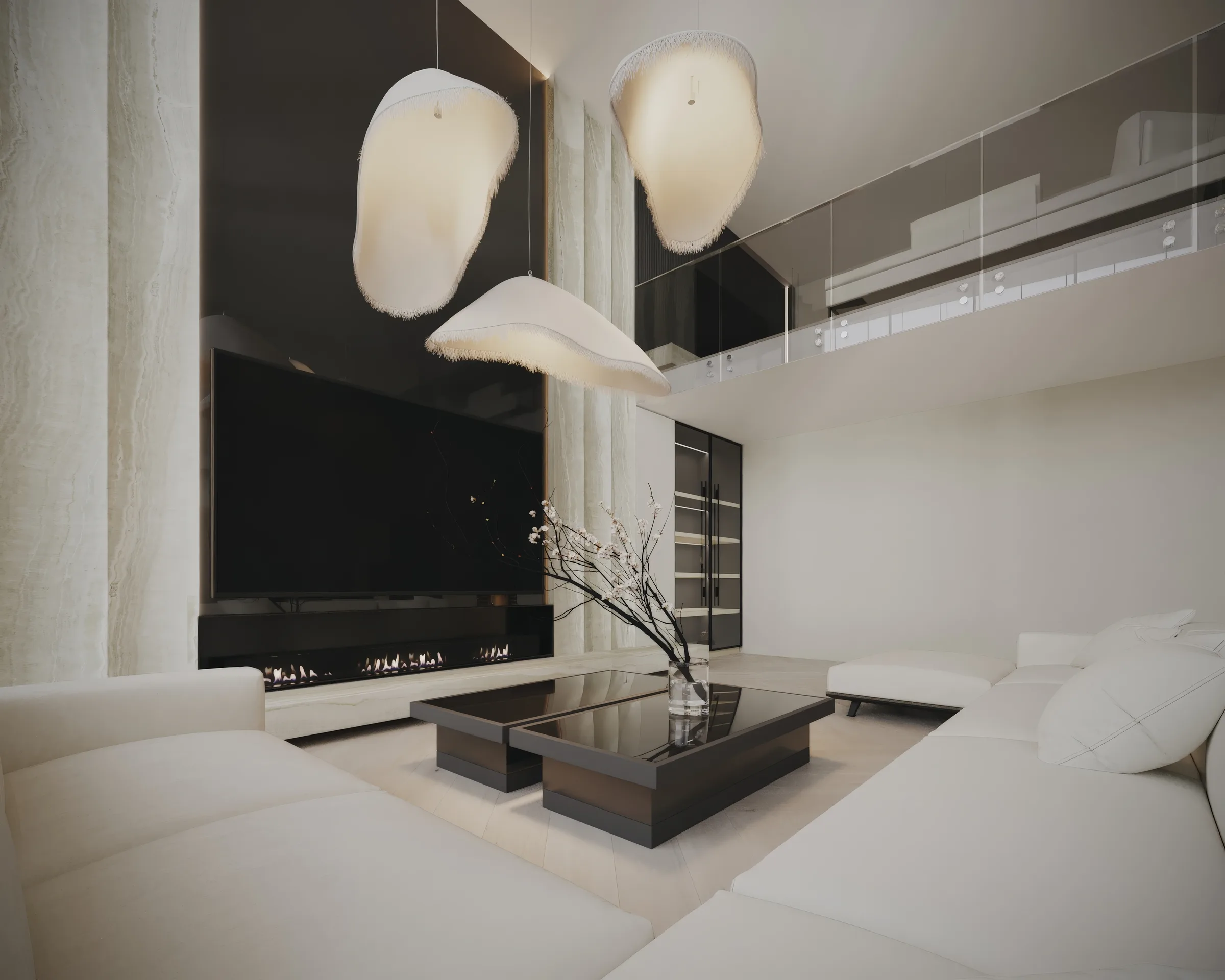
Sculptural minimalism. Broadbeach II is soft and sculptural, where form carries the room instead of ornament. Woonona in New South Wales is sculptural coastal minimalism.
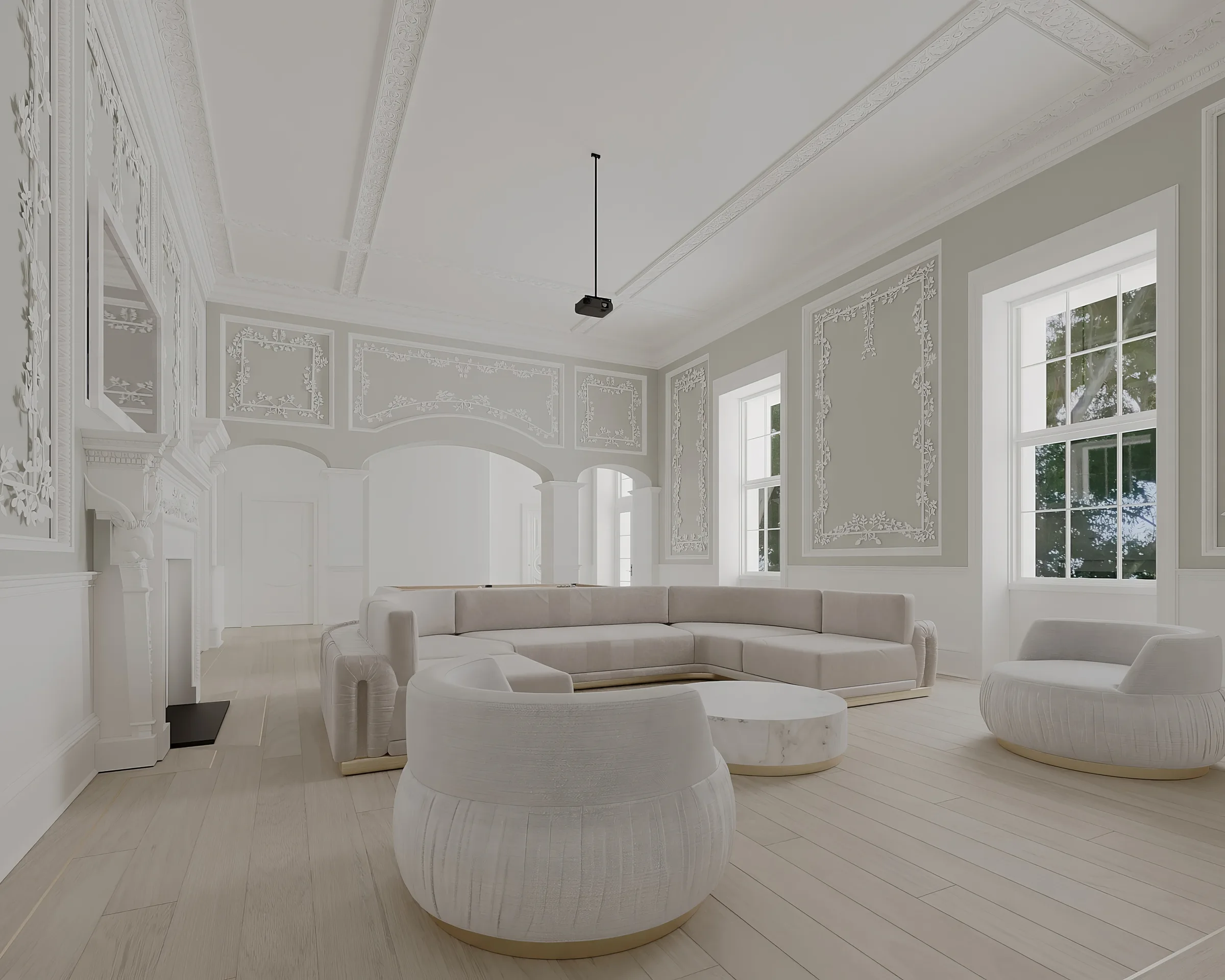
The classical one. Sovereign Islands II is soft neoclassical minimalism, a combination that sounds contradictory until you see it.
Elsewhere. Narre Warren North in Victoria is luminous resort minimalism. Huntington Beach in California is soft contemporary minimalism.
What minimalism demands of a house
Storage has to be designed, not found. Every object in the house needs a home before the house is finished. That is a joinery exercise done at drawing stage, and it is the single biggest predictor of whether a minimalist interior still works two years later.
Services have to be coordinated early. Switches, vents, sprinklers, speakers and downlights are the things that ruin a clean ceiling. They are cheap to move on a drawing and expensive to move afterwards.
Junctions have to be drawn. Shadow gaps, reveal depths, where skirting stops, how a wall meets a ceiling. In a decorated room nobody looks. In a minimalist room these are the only things to look at.
Where the money goes
Minimalism is not cheaper. It moves the cost around.
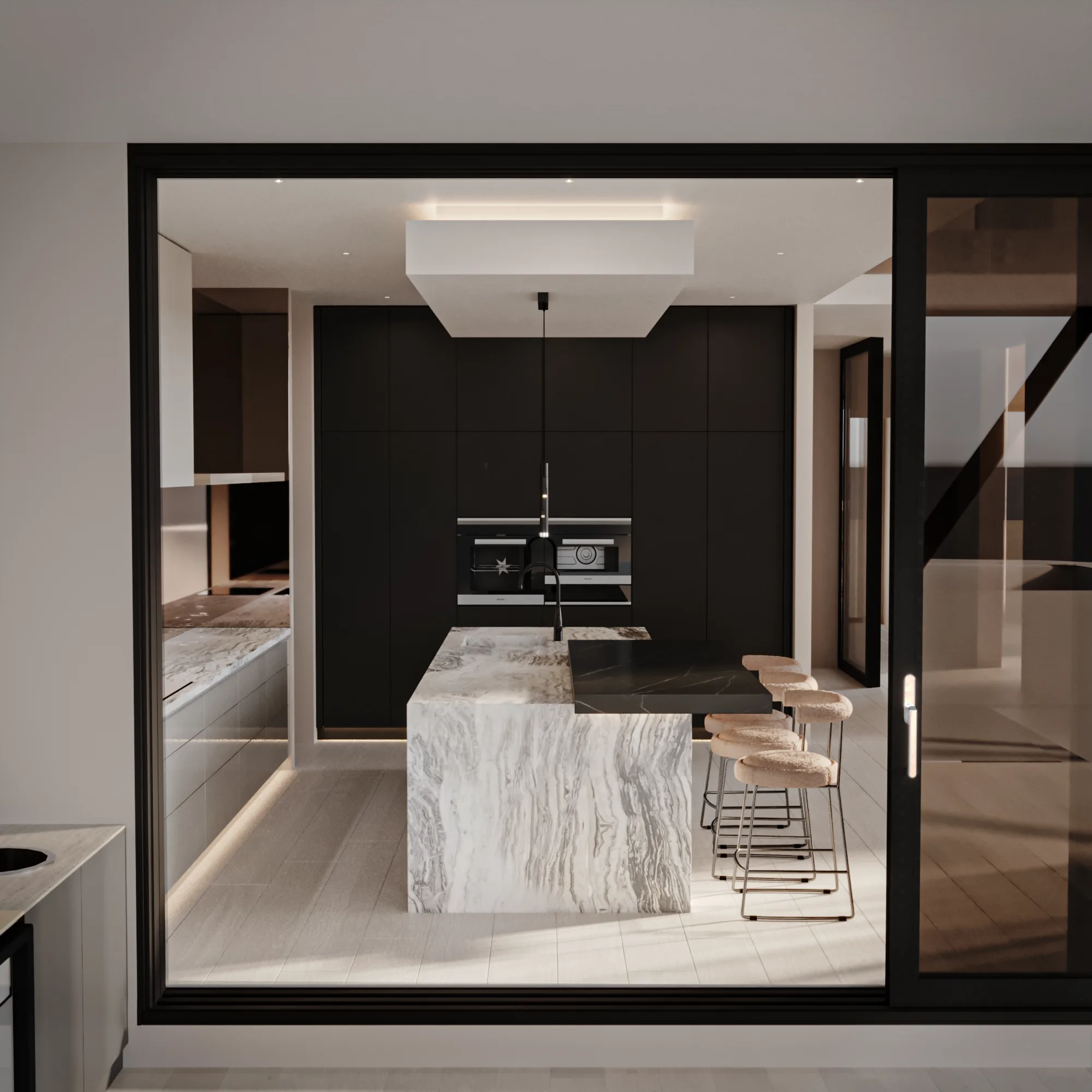
You spend less on furniture, ornament and pattern. You spend more on joinery, stone, glazing and documentation, because the effect comes from the building itself. A minimalist kitchen with integrated appliances and full height joinery costs more than a decorated one with a feature splashback, and it will still look right in fifteen years.
The honest guidance is that minimalism suits people who would rather own fewer, better things and are prepared to keep it that way. It suits people who like collecting far less well.
Related reading
Contemporary interior design is the broader framework most of this work sits inside. Coastal interior design covers the four schemes that are both minimal and coastal. Our study of Australia's most searched interior design styles puts minimalist third nationally at roughly 590 searches a month.
Frequently asked questions
What is warm minimalism?
Warm minimalism keeps minimalist discipline, meaning nothing present without a reason, but uses natural materials and layered light instead of a white and grey palette. Timber, stone with visible movement, linen and wool do the work that colour and pattern would do in a decorated room. It is the version most Australian clients want.
Is minimalist interior design cheaper?
No. It moves cost from furniture and decoration into joinery, stone, glazing and documentation, because the effect comes from the building. Budget the same or more, spent in different places.
Does minimalism work with children?
It works if the storage is designed properly and fails if it is not. Children generate objects, and objects need somewhere to go. A minimalist family home needs more built storage than a decorated one, not less.
How do you stop a minimalist room feeling cold?
Material and light. Use stone and timber with visible variation, textiles with texture, and at least three light sources at different heights. Cold rooms are usually flat rooms: one ceiling light, one hard floor, one synthetic fabric.
What is the difference between minimalist and Scandinavian?
Scandinavian is a regional style with its own palette, pale timber, soft colour and a particular furniture tradition. Minimalism is a principle about restraint that you can apply to any palette. The two overlap often, which is why people confuse them.