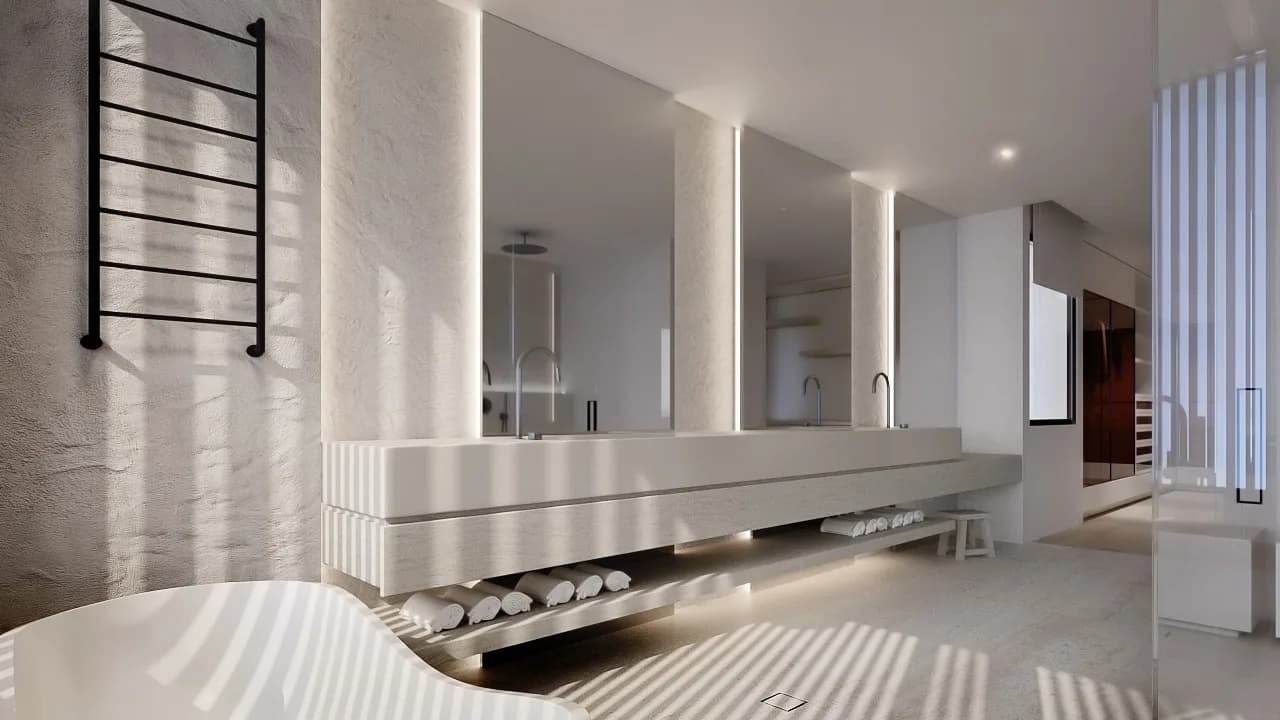
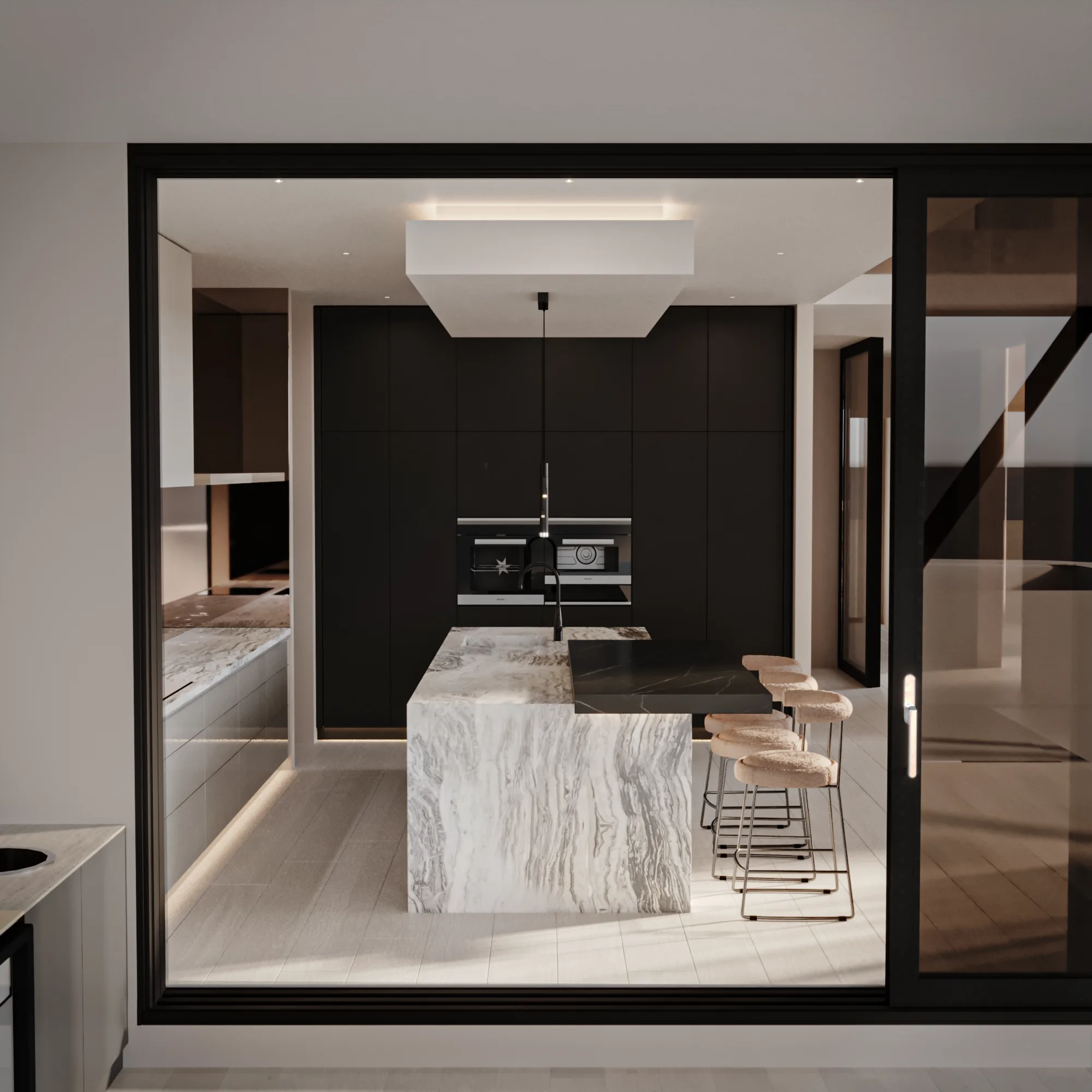
How we work
Commercial interior design, done the residential way
Commercial interior design is judged by whether people come back. Think about the last cafe you kept going back to. The coffee mattered. So did the soft light and the chair you could sit in for an hour. The room felt made for people, not just photos. Business spaces earn loyalty in the same quiet way that homes do, and comfort builds it over time.
On this page
Luxxe Interiors is a Gold Coast interior design studio led by Tammy Brazel, and it has designed homes across Australia since 2019. Tammy holds a Bachelor's Degree in Design and worked in home design for eight years before she founded Luxxe Interiors. We are residential first, and we say so plainly. Alongside the homes, the studio takes a few business briefs: dining venues, small offices, display suites and guest stays. If every search result so far has looked like the same grey open plan fitout, this page offers a warmer way in. It covers the work we accept, the proof behind it, the process and the fees.
Why hire a residential studio for a business space
The commercial fitout industry is competent at compliance. Workstation ratios, exit paths, acoustic ceiling tiles, a strip of brand colour along the reception wall. The result functions. It also tends to feel like it was designed for an organisation rather than for the people who spend their days inside it.
Residential design starts at the other end. A home has to please the same people at seven in the morning and eleven at night, through dinner parties, sick days and slow Sundays. Designing for that teaches things a standard fitout brief never asks for: how light changes a mood across the day, why a lower ceiling makes conversation feel safer, where people actually put their keys, their bags and their elbows.
Carry those instincts into a business space and the effect is easy to spot. A good dining room makes couples order the second bottle, and a calm front desk settles a client before a hard meeting. A true-to-life display suite makes a buyer picture Sunday breakfast, not study a floor plan. Interior design for business works when the person walking in stops acting like a visitor.
There is business logic under that feeling. A venue lives on return visits, and an office now competes with the spare room at home, so an employer who wants people back must offer more. Comfort is no longer a soft concern. In a venue or small office it is part of the product, and the return shows up in longer visits and staff who stay.
The commercial work we take on
The studio is deliberately small, so we choose commissions carefully. The ones we accept share a quality: they succeed when they feel like somewhere you would happily spend a whole day.
Hospitality suits us well, because it draws on years of work in home cinemas, bars and rooms made for guests, and the same questions carry across. Can each seat see the room? Can two people talk at a full table? Can the light shift from lunch to late evening? Will anyone want to give up the chair?
Small offices and professional suites are the second strand, for a law firm, clinic, adviser or creative team that wants a front desk feeling like an entry hall, meeting rooms with sound joinery and a staff kitchen people actually use. The aim is the same: look after the client and give staff a reason to stay.
Display suites and sales environments are the third. A display suite exists to sell an imagined life, and buyers can tell when it was dressed by someone who has never designed a real kitchen. Because we design actual luxury homes week in and week out, the suite reads true. For off plan projects, our 3D renders and virtual reality walkthroughs let buyers walk through apartments that do not exist yet.
We also design guest accommodation and premium short stay properties, which trade on feeling like a home for the simple reason that they are one.
Whatever the setting, the work follows our three service tiers. Interior architecture covers plans, materials, joinery and light. Full service runs from the first idea to buying and install. Furniture and styling suits a space that needs its final layer, not a rebuild.
We are equally clear about what we are not. A corporate headquarters with two thousand desks or a franchise rollout across three states needs a different kind of firm. The businesses we serve well want their premises to feel considered and personal, and they care what the interior says about them before a word is spoken.
Most of this commercial work sits on the Gold Coast, around Main Beach, Broadbeach, Mermaid Beach, Burleigh Heads, Sanctuary Cove, Hope Island and the Sovereign Islands. Brisbane is under an hour from the studio. We consider projects further afield case by case, and the studio has form there.
Proof, because anyone can claim good taste
We will not invent commercial credentials, so here is the residential record instead. It is worth reading closely, because it says more about how we would handle your premises than any list of fitout logos could.
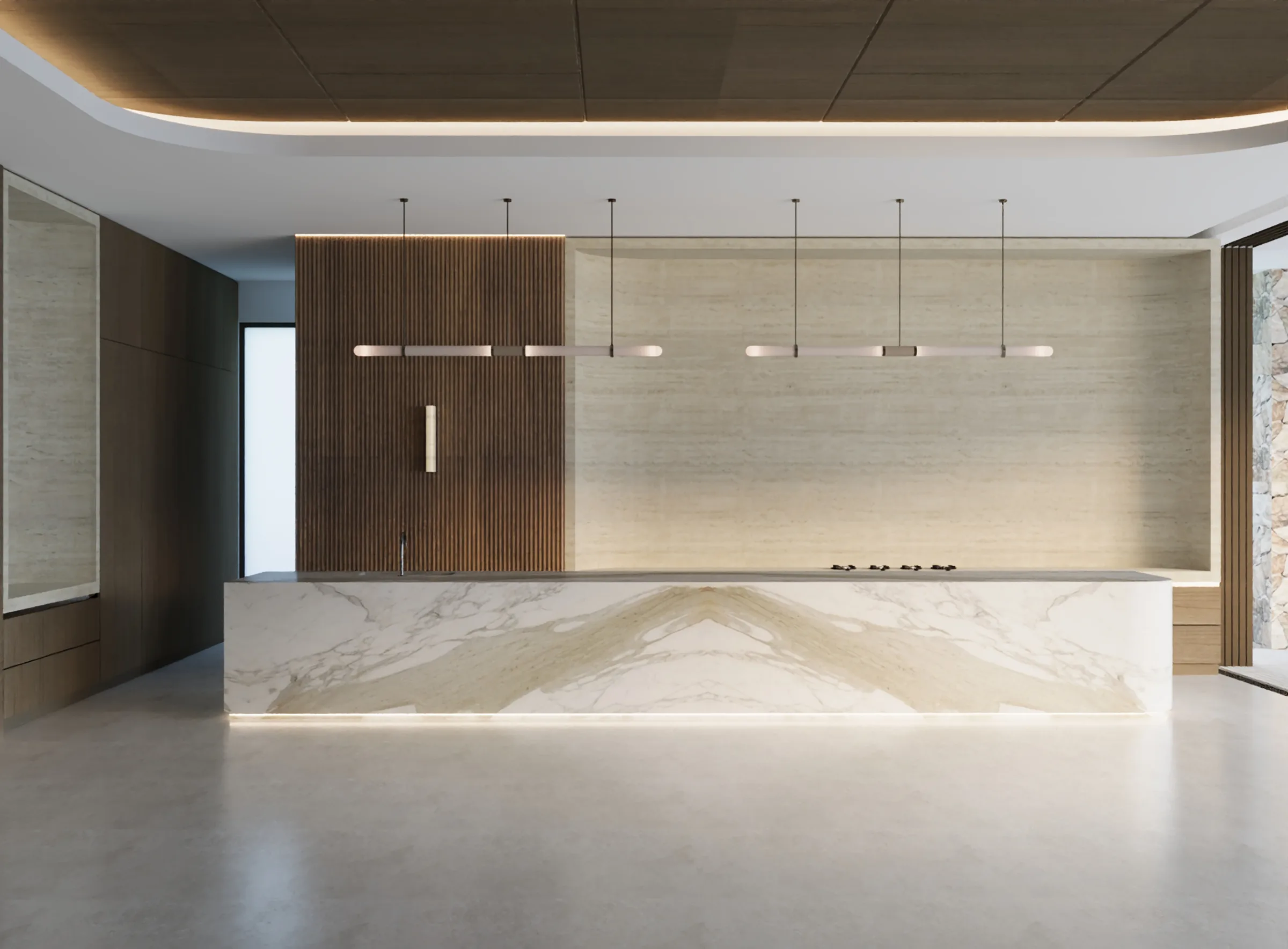
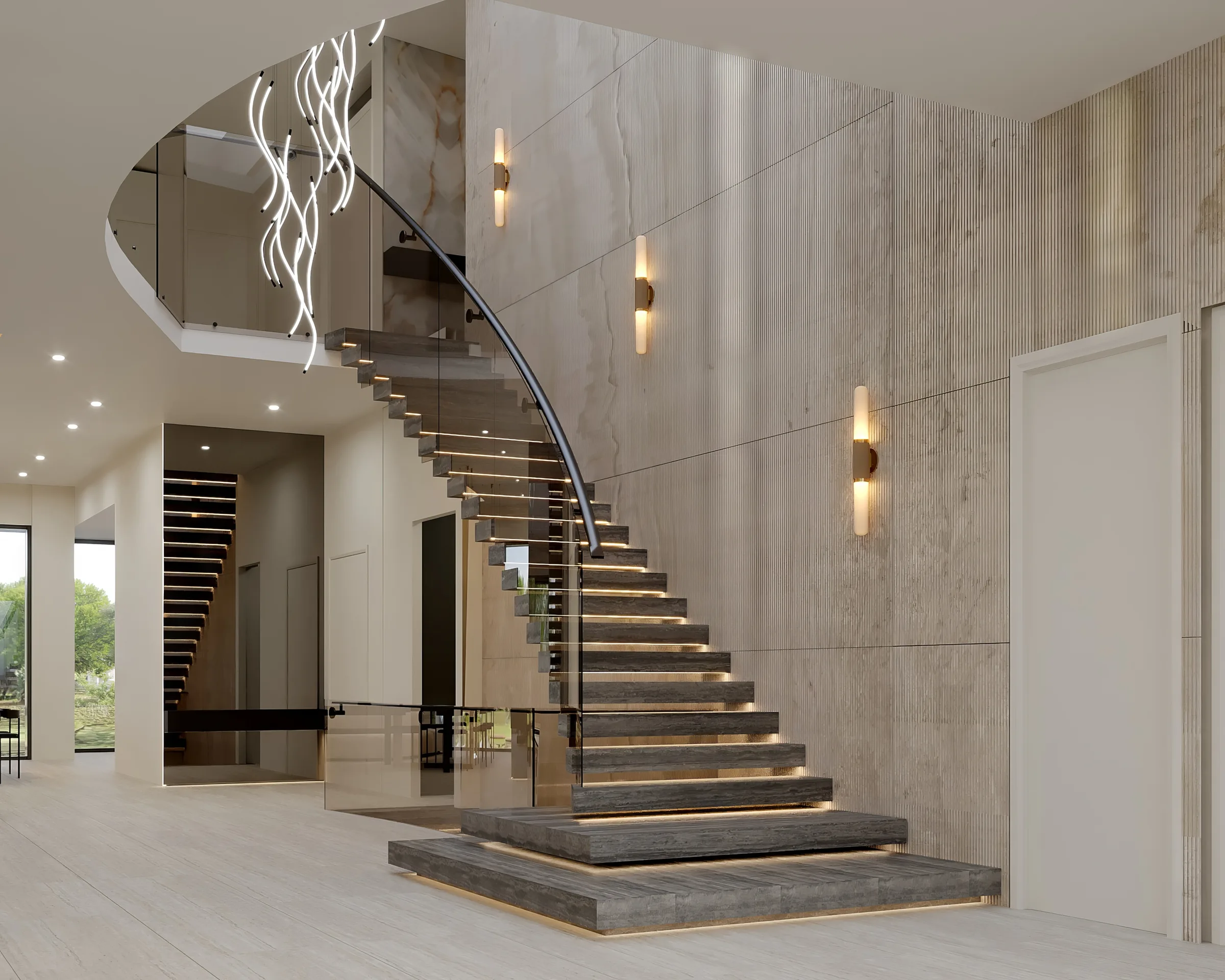
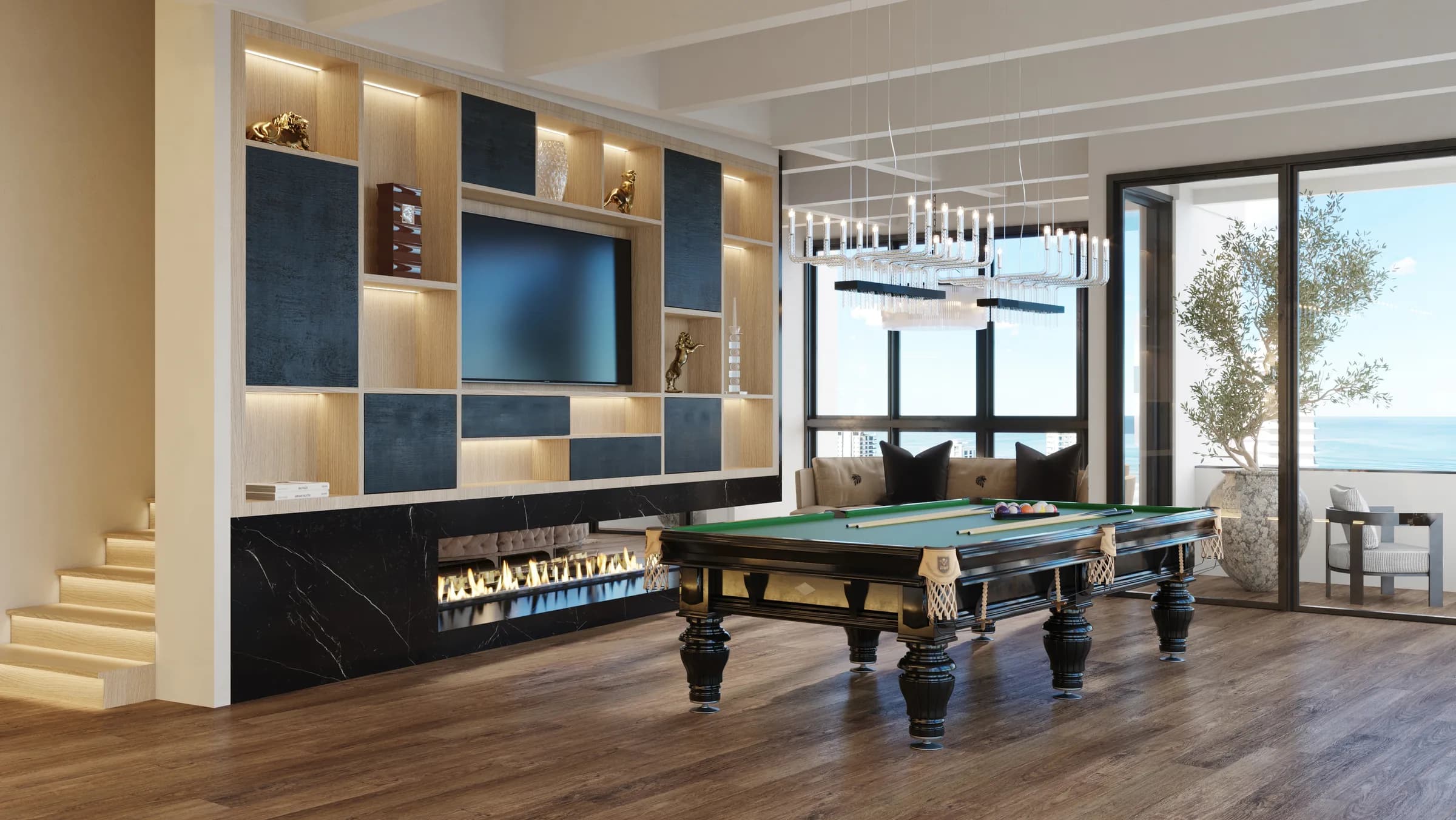
Luxxe Interiors has designed four homes on the Sovereign Islands, a group that includes homes above 4,000 square metres and properties valued above $20 million. A house at that scale works like a small hotel. It may have a trade-grade kitchen, cinema, bar, gym, guest wing and staff zone, and that work answers many of the same hard questions as a venue or office.
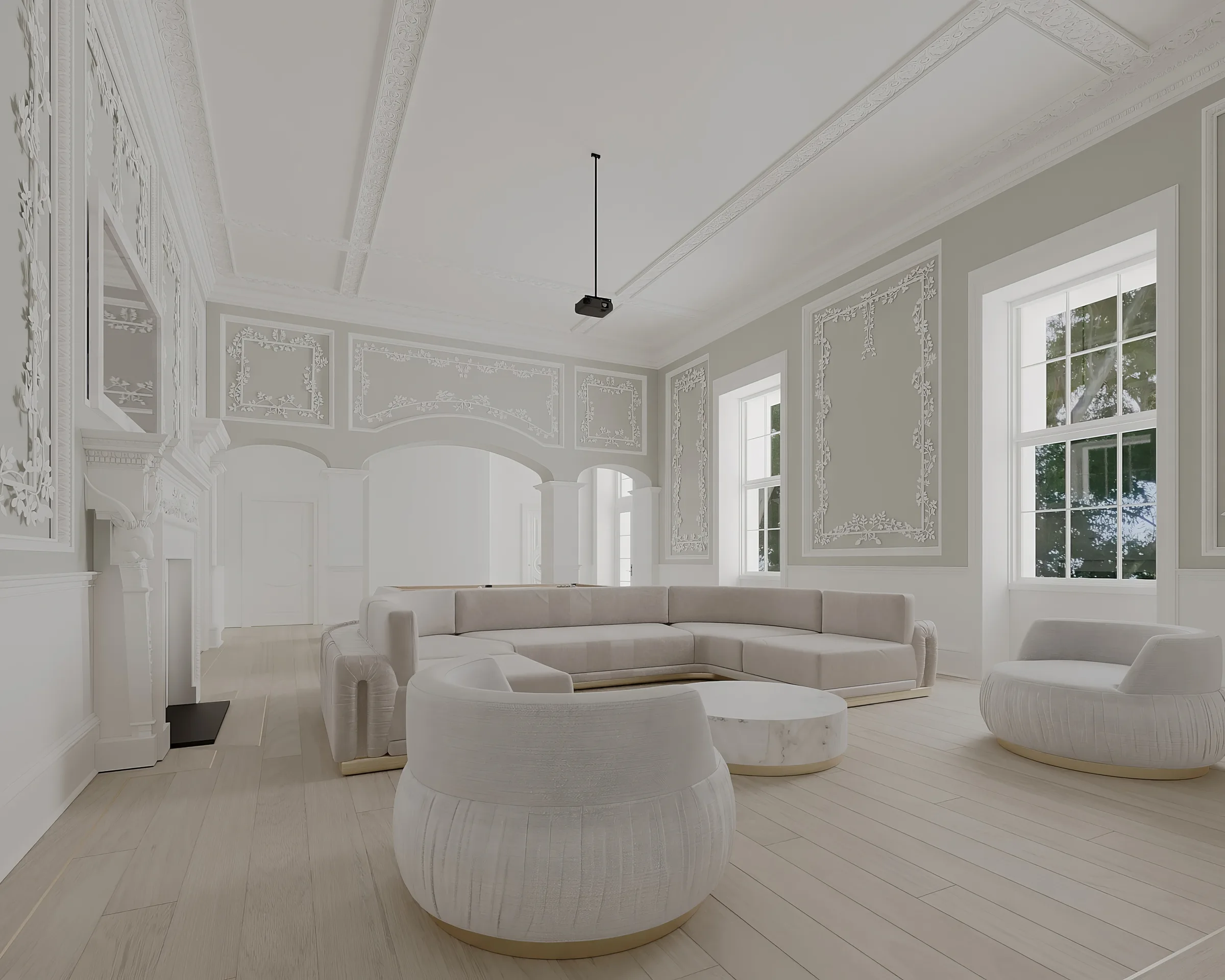
Further from home, Luxxe Interiors designed the interiors of Duddingston Guest House, the Category A listed Palladian house in Edinburgh designed by Sir William Chambers in the 1760s. Heritage work at that level enforces a discipline that never leaves you afterwards: nothing arbitrary, every decision justified.
The wider Gold Coast portfolio includes Casa Laguna, Aria Penthouse and Villa Oceana, along with a Carrara new build and a Brisbane renovation. Sydney work includes homes at Lindfield and Blakehurst, and a Mackay brief sits more than 900 kilometres up the coast. Distance does not decide whether a job runs well. Clear drawings do.
None of these are business sites, and we will not imply that they are. They prove two useful things: that Luxxe Interiors can hold fine detail at a vast scale, and that clients with a great deal at stake chose to trust the studio.
Your customers' benchmark is their own home
Australians spend heavily on their homes. The Australian Bureau of Statistics recorded $1.32 billion of home alterations and additions approved in June 2026 (ABS Building Approvals, June 2026). The Houzz & Home Australia study found that 94 per cent of home renovators hired experts.
The woman ordering coffee in your cafe on Saturday morning may have spent two years perfecting her own kitchen with a professional designer. Her standard for stone, lighting and seating comfort was set at home, and your venue either clears that bar or it does not. The employee weighing up the commute makes the same comparison between your office and a home office he has arranged exactly to his liking. Premises that would have impressed a decade ago now read as ordinary, because the living rooms around them kept improving.
This is the strongest argument for bringing residential thinking into interior design for business: the benchmark your customers apply is a domestic one, so it makes sense to hire from the side of the industry that sets it.
How a commercial project runs
Business work moves through the same four stages as our homes: Discover, Define, Create and Complete. The steps are built around clear choices, and a business simply has more people who need to agree.
Discover is the brief. We walk the premises or the plans and ask operational questions early. How do staff move during service? What should a customer feel in the first ten seconds? What will the lease and the landlord permit? What is the budget, honestly? Brand belongs in this conversation too, though we treat brand as atmosphere rather than a paint code pulled from a style guide. Where the business already trades, we spend time in it, because a cafe with regulars holds information no interior designer should ignore.
Define turns the brief into a clear plan. We map the space, materials, light and early joinery, and test each choice against daily use. A linen sofa may suit a home but fail beside a coffee bar. Finishes must cope with hard wear and daily cleaning and still belong in a warm room, not a clinic hall.
Create is where the studio earns its keep. Full drawings go to the builder and shopfitter so they can price the job without guesswork, then come the 3D views and a full-scale VR walk if you want one. A business choice can involve partners, boards, banks or a brand team, and walking through an unbuilt venue can end the debates that mood boards start. Buying follows, with trade-grade pieces where rules and wear demand them and softer home-grade pieces wherever they will cope. That mix is where the warmth comes from.
Complete covers install, styling and handover, planned around trading if the site is live. A fitout that opens two weeks late can lose more than the design fee, so the timeline gets the same care as the palette.
How fees work
There is no standard price for this work, and quoting one sight unseen would be a guess. We scope fees after the first consultation and put them in writing before design begins.
Fees are tied to clear outputs, so the work can stay flexible: some clients take the drawings to their own shopfitter, others want Luxxe Interiors to buy, install and style the last cushion. Cost follows the scope. Floor area, drawing depth, custom joinery and site care all move it, and you know each stage's fee before that stage starts.
If you are weighing up a venue, an office or a display suite, tell us about the project. Tammy will give you an honest read on whether the studio is the right fit for it.
Frequently asked questions
What does interior design for a business actually include?
It can include room plans, finishes, joinery, light, furniture and styling, along with the drawings a builder or shopfitter needs to price the job. Luxxe Interiors can add 3D views, a VR walk and managed buying. Your builder and certifier still own approvals, and our drawings make that job clearer.
How is designing for a business different from designing a home?
The constraints multiply: leases, compliance, durability, brand and trading hours all sit on top of the usual questions of space and light. The goal barely changes, though. People relax, spend and return in rooms that feel considered and human, which is what residential designers train on every day. The craft carries over. There is just more paperwork.
How much does interior design for a business cost?
It depends on floor area, scope and how much of the delivery you want managed. Expect a written fee proposal after the first consultation, staged against deliverables, with each stage priced before it begins. You commit stage by stage, never to the whole programme at once.
Do you take commercial projects outside the Gold Coast?
Yes, case by case. Brisbane is under an hour away, and the studio has designed homes in Sydney and Mackay and taken briefs as far away as Edinburgh, so distance is a matter of logistics. Renders and VR walkthroughs carry most of the decision making wherever the site happens to be.
Can we see the design before committing to the build?
Yes. We build the key spaces in 3D, and if you want it you can walk them in VR before booking a trade. This step matters when an owner must answer to a partner, board or backer, because it settles how the space will feel while changes still cost nothing.
Do you design display suites for developers?
Yes. A display suite makes a home promise in a sales setting, which is exactly the overlap this studio knows, so we design suites and sales rooms that feel like the homes being sold. For off plan work, 3D and VR let buyers walk through the apartment before the build starts.
Keep reading
Related guides
- Penthouse interior design, Gold Coastpenthouse interior design gold coast
- Apartment renovation, Gold Coastapartment renovation gold coast
- How much does an interior designer cost in Australia?how much does an interior designer cost
- Private international design sourcing for considered interiorsinternational design sourcing