What do textiles do in a luxury interior?
Last updated
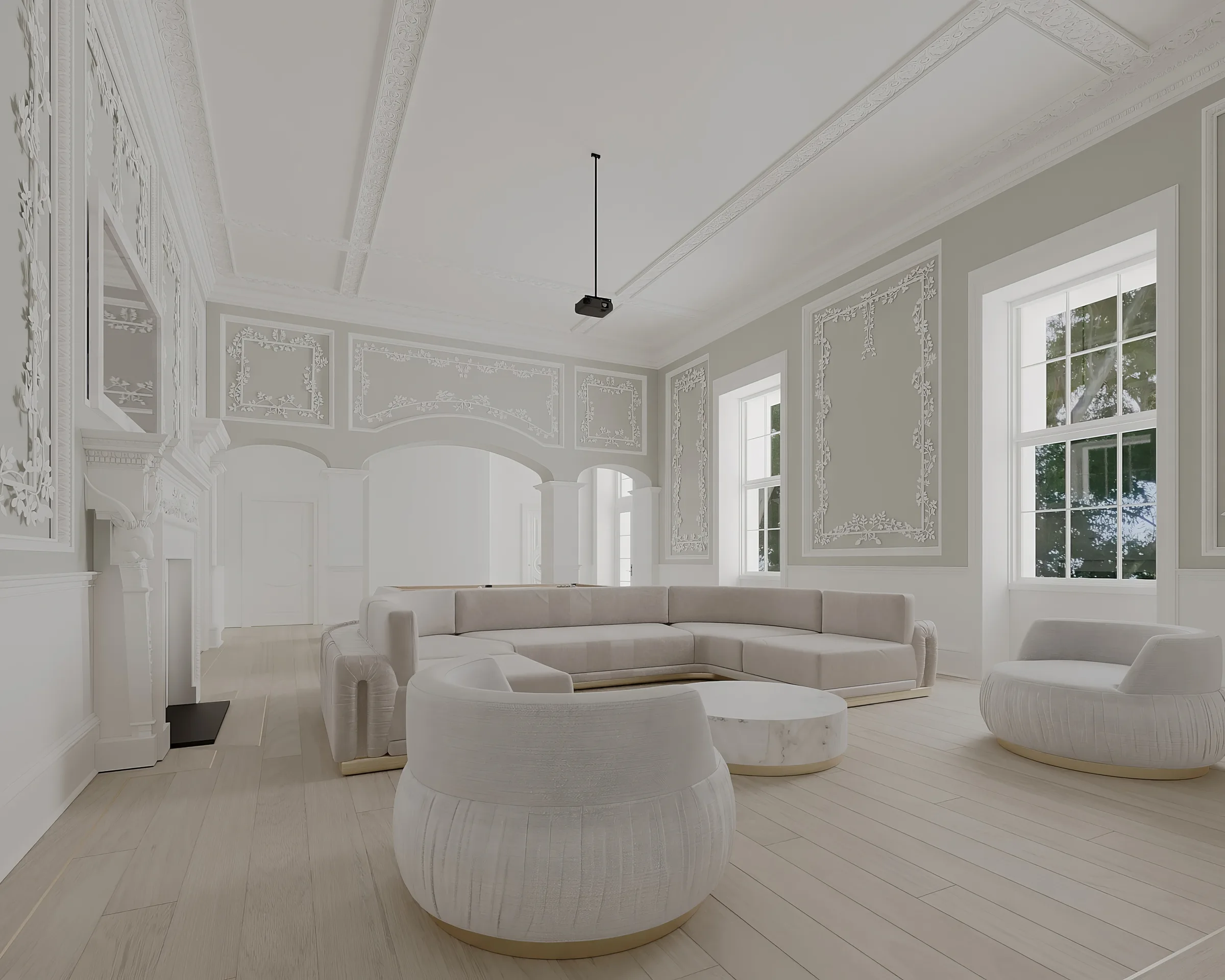
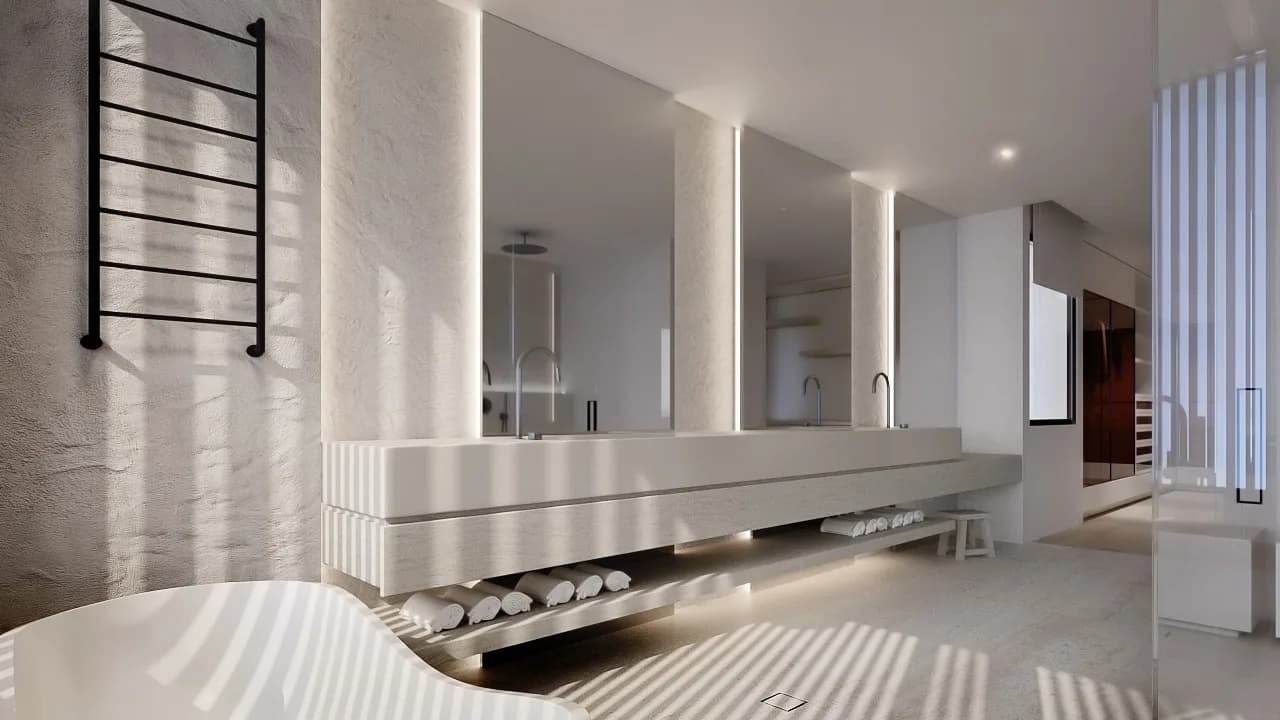
Textiles do the softening in a luxury interior: they are what make hard architecture liveable. Stone, glass and joinery give a house its structure and its drama, and every one of those surfaces is hard, flat and acoustically bright. The upholstery, drapery, rugs and bedding are the counterweight: they absorb sound, soften light, and give the body somewhere to land.
The layer you touch most
Almost nothing in a house gets touched as often as its textiles. You sit on the boucle, sleep in the linen, walk the rug barefoot and pull the curtain every evening. Money spent here is felt daily in a way a ceiling detail never is, which is why the studio weights the fabric budget towards the things you touch.
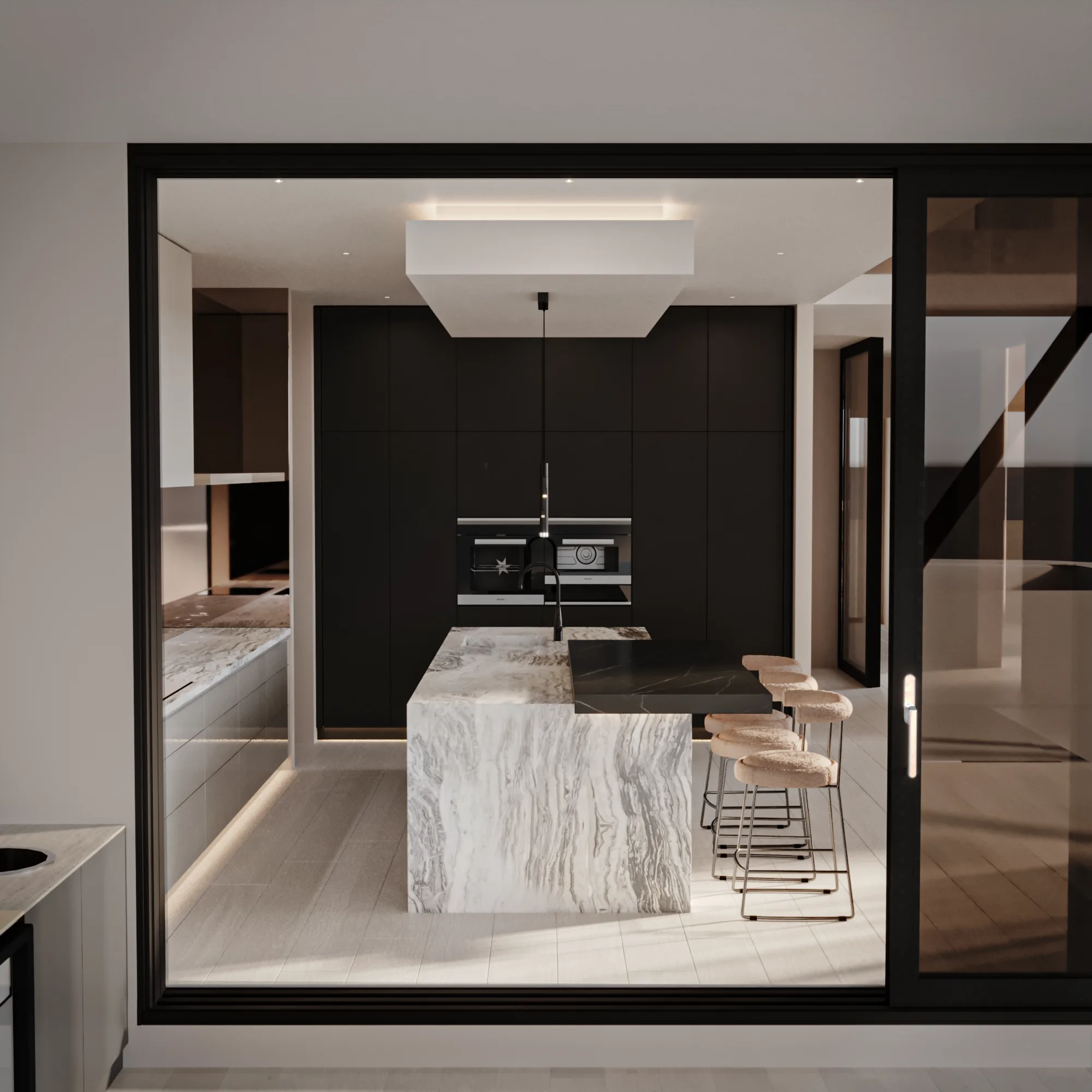
Weight matters as much as colour. A heavy linen falls differently to a light one, a dense wool rug sits differently underfoot to a thin viscose, and no photograph shows either. The studio chooses textiles by hand for the same reason it chooses stone at the yard.
Working against the hard surfaces
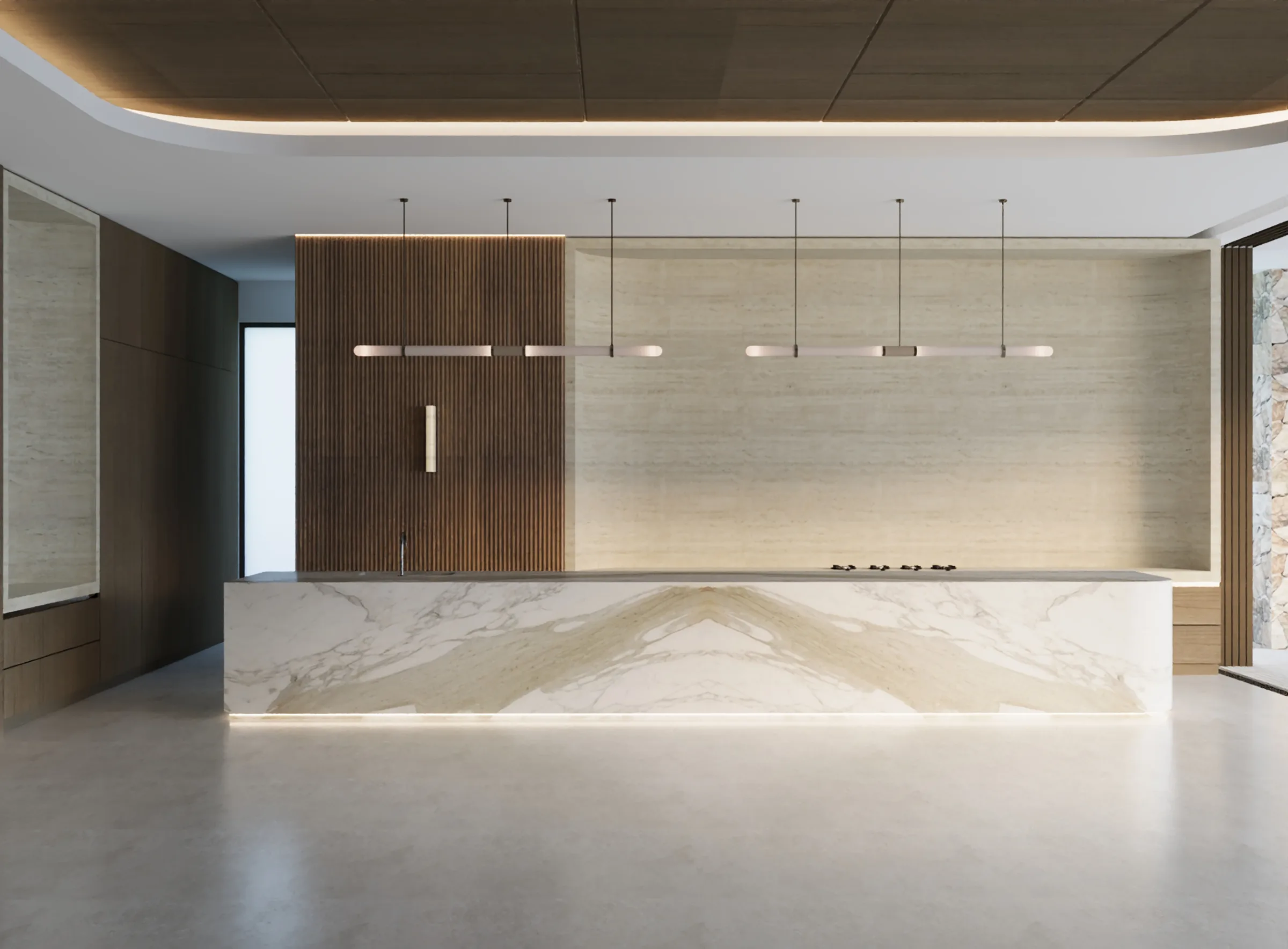
A room of book-matched marble and dark timber needs its opposite. The studio's schemes pair expressive stone with quiet, tactile fabric: boucle and heavy weaves against polished surfaces, sheer drapery to soften waterfront glare, rugs large enough that the furniture sits on them.
Coastal houses add a practical filter. Western sun bleaches an unprotected fabric in a season, and salt air is hard on natural fibres. Performance weaves and solution-dyed yarns do the work in the rooms that face the light.
Where custom earns its place
Curtains are made to measure or they look bought, and a bedhead upholstered to the width of the wall does what no standard bed can. Cushions and throws are the one place to be playful, because they are the cheapest thing in the room to change your mind about.
Furniture and styling covers how the studio selects and installs the whole soft layer.